Cuban food tells the story of the island itself - a layered, complex, sometimes contradictory blend of cultures that somehow works beautifully together. Understanding Cuban food history helps you appreciate why that plate of ropa vieja or congri at your paladar tastes the way it does.
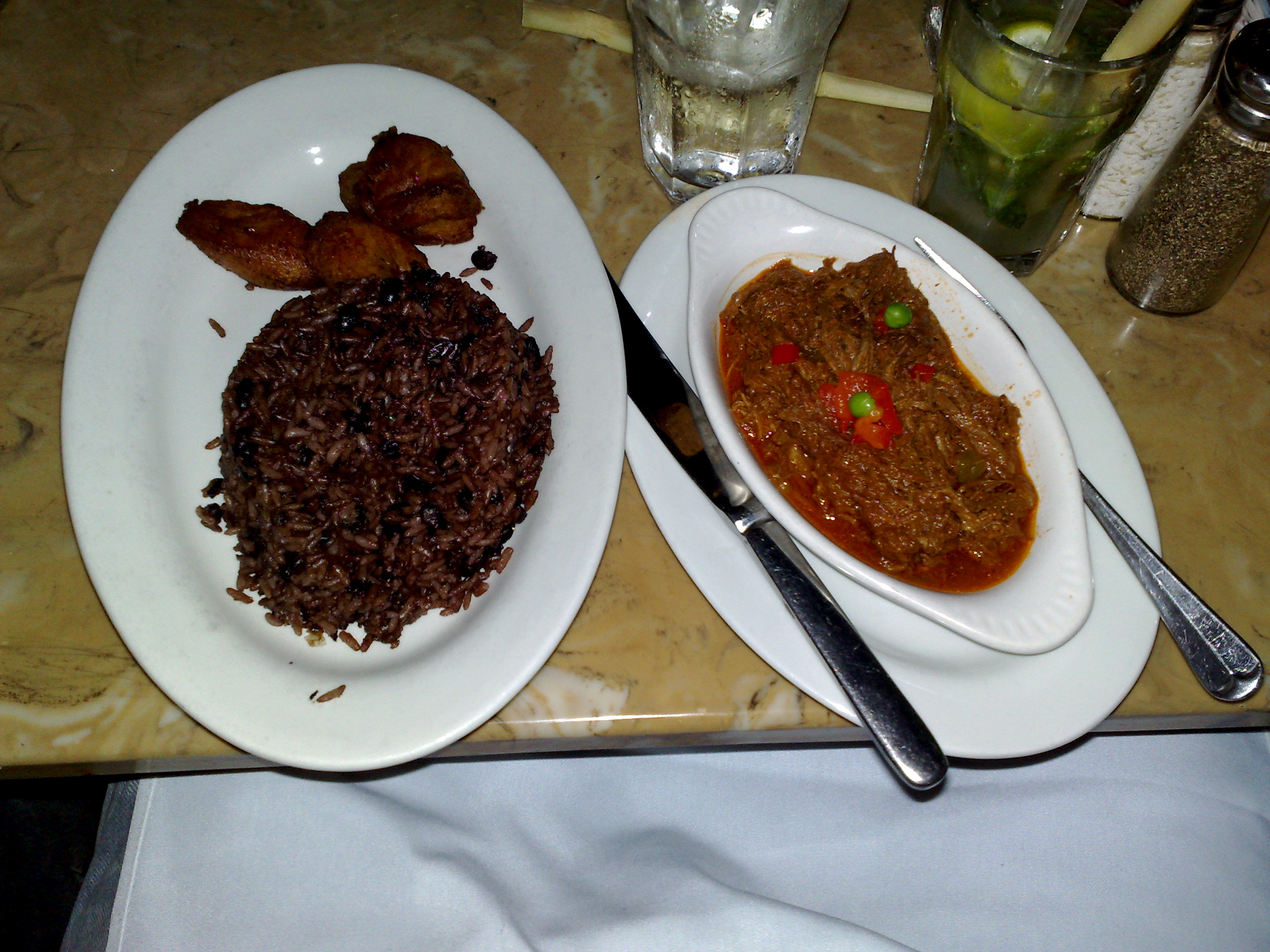
Photo: Wikimedia Commons, CC license
Spanish Colonial Foundations (1500s-1800s)
Spanish colonizers brought the building blocks: rice, citrus fruits, cattle, pigs, olive oil, wine, and wheat. They also brought cooking techniques - braising, stewing, and the sofrito (a sautéed base of garlic, onion, peppers, and tomato) that remains the foundation of Cuban cooking today.
Many of Cuba's most iconic dishes have clear Spanish roots: ropa vieja originated in the Canary Islands, flan came from Spain's Moorish-influenced dessert tradition, and the Cuban tortilla (a thick omelet) mirrors the Spanish tortilla española.
African Influences (1500s-1886)
The hundreds of thousands of enslaved Africans brought to Cuba transformed the island's cuisine with ingredients, techniques, and flavors from West and Central Africa. Key contributions include:
- Plantains - both tostones (fried green) and maduros (sweet ripe), now inseparable from Cuban dining
- Okra (quimbomb, ) - used in stews and Afro-Cuban religious dishes
- Black-eyed peas - used in traditional dishes with ritual significance
- One-pot cooking - the technique behind ajiaco, Cuba's national stew
- Root vegetables - malanga, ,ame, and boniato became staples
The fusion of African and Spanish cooking traditions created what we now call comida criolla (Creole food) - the soul of Cuban cuisine.
Photo: Wikimedia Commons, CC license
Other Influences
These centuries-old techniques are still alive today - see how they translate into classic Cuban recipes you can cook at home.
Chinese immigration (1840s-1860s): Over 100,000 Chinese laborers came to Cuba, bringing rice cultivation techniques, stir-frying, and the foundations of Havana's Barrio Chino. Cuban-Chinese fusion is subtle but real - the prominence of rice in every meal owes much to Chinese influence.
French influence (1790s): French planters fleeing the Haitian Revolution brought advanced coffee cultivation and refined cooking techniques to eastern Cuba.
American influence (1900s-1959): Pre-revolution Cuba absorbed American food culture - Coca-Cola, hamburgers, ice cream parlors. Havana's cocktail scene (mojitos, daiquiris) was shaped by American tourists and expats.
Revolution & the Special Period (1959-2000s)
The revolution nationalized restaurants and farms. Private dining disappeared. State-run restaurants served standardized, often uninspiring food. The Soviet Union subsidized Cuba's economy, but food was rationed through the libreta system.
When the Soviet Union collapsed in 1991, Cuba entered the "Special Period" - a devastating economic crisis that transformed the food scene. Cubans had to become incredibly resourceful, cooking with whatever was available. This period of scarcity paradoxically preserved traditional cooking methods and recipes.
Cuba's history is inseparable from its geography - our guide to Havana's historic neighborhoods brings this story to life on the street.
The Paladar Revolution (1990s-Present)
In 1995, the government legalized small private restaurants - paladares - as part of limited economic reforms. Initially restricted to 12 seats and family-only employees, these home restaurants slowly grew into the vibrant dining scene we see today.
The 2010s brought further liberalization: more seats, hired employees, and imported ingredients. A new generation of Cuban chefs, some trained abroad, began reimagining traditional cuisine with modern techniques. The result is today's paladar boom - from farm-to-table fine dining to creative street food - that makes Havana one of the Caribbean's most exciting food cities.
Photo: Wikimedia Commons, CC license